Fishing License Cost by State — 2026 Complete Guide
From $10 a year in Louisiana to $250+ for out-of-state salmon permits in Alaska — here's everything you need to know about fishing license costs across all 50 states, including who pays less and exactly what the fee covers.
Written and fact-checked by Jordan Whitfield, Site Editor
What a Fishing License Actually Costs in 2026
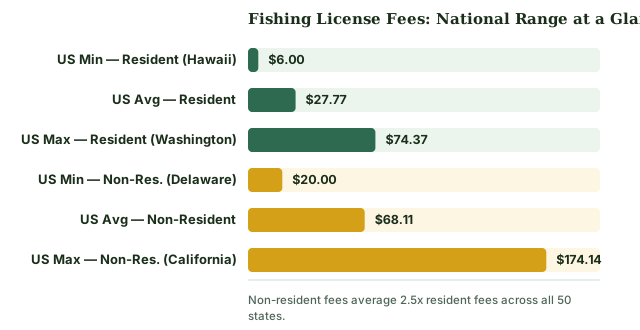
The average resident annual fishing license in the United States costs around $26–$32. Non-residents pay roughly 2–3× that amount — typically $55–$80 for an annual license, though a few western states charge well over $100 for non-resident anglers.
These are base license fees. Many states sell additional stamps or endorsements on top: trout stamps, salmon/steelhead tags, Great Lakes permits, and similar add-ons that can add $10–$25 per endorsement. In states like Oregon and Washington, a complete non-resident license with all required tags can exceed $200.
License fees are set by each state's fish and wildlife agency — not the federal government. They're used almost entirely to fund conservation programs, fish stocking, habitat restoration, and law enforcement. The 1937 Federal Aid in Sport Fish Restoration Act (Dingell-Johnson Act) created a structure where federal excise taxes on fishing equipment are matched by state license revenue, effectively doubling the conservation funding generated by your license fee.
Look up your exact license fee — resident or non-resident, annual or day-trip.
Check My State's FeeThe Cheapest States for Fishing Licenses
These five states consistently rank as the most affordable for resident anglers:
| State | Resident Annual | Note |
|---|---|---|
| Hawaii | $5 Cheap | Freshwater only — doesn't cover ocean fishing |
| Delaware | $8.50 Cheap | Residents 65+ are exempt entirely |
| South Carolina | $10 Cheap | Tied for lowest full-scope resident fee |
| Arkansas | $10.50 Cheap | Seniors pay just $3.50 |
| Missouri | $14 Cheap | Flat rate, no county variation |
Hawaii & Delaware residents: These carry the lowest sticker prices in the country, but with a real caveat each — Hawaii's $5 license only covers freshwater sportfish, not the ocean fishing most anglers actually want, and Delaware's low price comes with a narrower scope than states like Missouri or South Carolina. Lowest price and best value aren't always the same thing.
The Most Expensive States for Fishing Licenses
License cost tends to track with available fishery resources and conservation cost. States with world-class salmon, steelhead, or saltwater fisheries charge more — both because they cost more to maintain and because the fishing is worth more:
| State | Resident Annual | Non-Resident Annual | Why So High |
|---|---|---|---|
| Washington | $74.37 High | $170 High | Combination license covers freshwater, saltwater & shellfish |
| California | $64.54 High | $174.14 High | Ocean + freshwater; large agency staff |
| Oregon | $50 High | $138 High | Base license plus a required Combined Angling Tag for salmon/steelhead/sturgeon/halibut |
| Colorado | $44.87 High | $124.01 | High-demand trout and high-country fisheries |
| Montana | $31 | $117.50 High | Blue-ribbon trout rivers, heavy conservation funding |
Non-Resident Fishing Licenses — What to Expect
If you're fishing outside your home state, expect to pay significantly more. Non-resident licenses typically run 2–5× the resident rate. This isn't arbitrary pricing — it reflects the fact that non-residents don't contribute to the state's license revenue base year-round, but still use the fisheries and benefit from state conservation programs.
The markup is sharpest in high-demand states. Oregon charges non-residents $138 versus $50 for residents — a 2.8× difference, largely from the required Combined Angling Tag. Wyoming, by contrast, charges $102 non-resident vs $27 resident base license — but every angler 14+ also owes a mandatory $21.50 conservation stamp on top of either price.
For multi-state fishing trips, the costs add up quickly. A week fishing Wyoming + Montana + Idaho as a non-resident could cost $250+ in licenses alone, before any permits, tags, or stamps. This is worth calculating in advance — the Trip Planner tab on the calculator lets you add up license costs across multiple states for one trip.
Planning a multi-state fishing trip? Add up your total license cost in one place.
Open Trip Planner1-Day and 7-Day Fishing Licenses
Not every angler needs a full-year license. Most states offer short-term alternatives designed for tourists, one-time trips, or anglers who only fish a couple of times a year:
- 1-day licenses — Available in most states; typically $5–$20. Good for a single fishing day or a family trying fishing for the first time.
- 7-day licenses — Available in roughly half of states; typically $20–$40. Designed for vacation anglers staying a week.
- 3-day licenses — Less common, but available in states like Florida and North Carolina as a middle option.
When does a short-term license beat an annual? If you're a non-resident fishing for 3 days or fewer, a 1-day or 3-day license almost always beats the annual rate. Run the break-even math: at $90 non-resident annual vs $15/day, you'd need to fish more than 6 days in the same state in a year for the annual to make financial sense.
Senior and Youth Fishing License Exemptions
Over half of U.S. states offer reduced-cost or free fishing licenses for senior residents. The threshold varies widely: some states start at age 65, others at 70, a few at 62. Most programs apply to residents only — non-resident seniors almost always pay full price.
Notable senior exemptions:
- Florida — Residents 65+ fish free (freshwater and saltwater)
- Texas — Residents 65+ pay a reduced combination license
- New York — Residents 70+ fish free
- Alabama — Residents 65+ fish free with a free senior lifetime license
- Rhode Island — Residents 65+ fish free (no license required at all)
Youth exemptions are nearly universal — most states allow anglers under 16 to fish without a license at all when accompanied by a licensed adult. A few states extend this to age 18.
Veteran and disability exemptions: Many states offer free or reduced licenses for disabled veterans, active military, or residents with qualifying disabilities. Check your state wildlife agency's website directly or look for a "Special Licenses" section on their licensing page.
Fishing License Costs — All 50 States (2026)
Base annual license fees. Stamps, endorsements, and add-ons (trout stamps, saltwater endorsements, salmon tags) are sold separately in most states and are not included below.
| State | Resident Annual | Non-Res Annual | Non-Res 1-Day | Senior Free |
|---|---|---|---|---|
| Alabama | $17 | $66.25 | — | ✓ (65+) |
| Alaska | $20 | $100 | $15 | — |
| Arizona | $37 | $55 | $20 | — |
| Arkansas | $10.50 | $60 | — | Reduced (65+) |
| California | $64.54 | $174.14 | $21.09 | — |
| Colorado | $44.87 | $124.01 | $21.90 | — |
| Connecticut | $28 | $55 | — | ✓ (65+) |
| Delaware | $8.50 | $20 | — | ✓ (65+) |
| Florida | $17 | $47 | $17 | ✓ (65+) |
| Georgia | $15 | $50 | $10 | Reduced (65+) |
| Hawaii | $5 | $25 | — | ✓ (65+) |
| Idaho | $30.50 | $108.00 | $23 | — |
| Illinois | $15 | $31.50 | $10.50 | Reduced (65+) |
| Indiana | $23 | $60 | $15 | — |
| Iowa | $22 | $48 | — | Reduced (65+) |
| Kansas | $25.00 | $75.00 | $10.00 | ✓ (75+) |
| Kentucky | $24.31 | $58.14 | $15.86 | ✓ (65+) |
| Louisiana | $17 | $68 | — | Reduced (60+) |
| Maine | $30 | $83 | $18 | — |
| Maryland | $32 | $55 | — | Reduced (65+) |
| Massachusetts | $40 | $50 | — | ✓ (70+) |
| Michigan | $26 | $76 | $10 | Reduced (65+) |
| Minnesota | $25 | $51 | $14 | 90+ only |
| Mississippi | $10 | $68 | — | ✓ (65+) |
| Missouri | $14 | $57 | $9 | ✓ (65+) |
| Montana | $31 | $117.50 | $31.50 | — |
| Nebraska | $41 | $95.50 | $14.50 | Reduced (65+) |
| Nevada | $40 | $80 | $18 | — |
| New Hampshire | $45 | $63 | $15 | Reduced (68+) |
| New Jersey | $22.50 | $34 | — | ✓ (70+) |
| New Mexico | $25 | $56 | $12 | ✓ (70+) |
| New York | $25 | $50 | $5 | ✓ (70+) |
| North Carolina | $30 | $54 | $14 | Reduced (65+) |
| North Dakota | $27 | $68 | — | Reduced (65+) |
| Ohio | $25 | $76.96 | $27.04 | Reduced (65+) |
| Oklahoma | $31 | $81 | $26 | Reduced (65+) |
| Oregon | $50 | $138 | — | — |
| Pennsylvania | $27.97 | $60.97 | $31.97 | Reduced (65+) |
| Rhode Island | $24 | $41 | — | ✓ (65+) |
| South Carolina | $10 | $35 | $10 | Reduced (64+) |
| South Dakota | $31 | $80 | $26 | Reduced (65+) |
| Tennessee | $33 | $49 | $20.50 | Reduced (65+) |
| Texas | $30 | $58 | $11 | — |
| Utah | $40 | $120 | $9 | — |
| Vermont | $28 | $54 | — | Reduced (66+) |
| Virginia | $23 | $47 | $8 | Reduced (65+) |
| Washington | $74.37 | $170 | $20.50 | — |
| West Virginia | $19 | $37 | — | Reduced (65+) |
| Wisconsin | $20 | $55 | $15 | Reduced (65+) |
| Wyoming | $27 | $102 | $14 | Reduced (65+) |
5 Ways to Pay Less for a Fishing License
Buy a Lifetime License Early
Most states sell lifetime licenses that eliminate the annual renewal. At a young age, the break-even point can be 10–15 years. Over a 30-year fishing life, you save hundreds.
Fish Your Home State First
Resident licenses are 2–5× cheaper than non-resident. Maximizing local days before buying out-of-state licenses can save $60–$100 per year on average.
Use Short-Term Licenses for Travel
A 7-day non-resident license in Montana costs ~$45 vs $86 for the annual. If you only visit once a year, the annual is money left on the table.
Check Senior / Disability Eligibility
Over 30 states offer free or reduced licenses for seniors — some starting as young as 60. Veterans and disabled residents often qualify too.
Take Advantage of Free Fishing Days
Almost every state designates "free fishing weekends" per year — typically in June during National Fishing and Boating Week — where no license is required.
Bundle With a Hunting License
Many states sell discounted combination fishing + hunting licenses that cost less than buying each separately. Almost always the better deal if you hunt at all.
Run the lifetime license break-even math for your state — is it worth buying now?
Open Break-Even CalculatorFrequently Asked Questions
Do I need a license to fish in a private pond?
It depends on the state. Most states require a license for any fishing regardless of whether the body of water is public or private. A handful of states (including Texas and Oklahoma) exempt private landowners fishing their own property. Check your state's regulations — if in doubt, get the license.
Can I fish with a license from another state?
No. Fishing licenses are state-specific and are not transferable. If you're fishing in another state, you need that state's license — even if you have a valid license in your home state. Some border reciprocity agreements exist (a few Midwestern states have agreements for specific rivers forming their borders), but these are narrow exceptions.
What happens if I fish without a license?
Fines range from $50 to $500 depending on the state, and some states include additional surcharges for fishing over limits or out-of-season violations. A conservation officer (game warden) can issue citations on the water. Subsequent violations increase the penalty and can result in license revocation.
Does my fishing license cover saltwater and freshwater?
Not always. California, Florida, and several other coastal states issue separate freshwater and saltwater licenses, or require separate saltwater endorsements. Some states (like North Carolina) include both in one license; others sell them separately. Check your state's regulations before fishing in multiple environments.
Do I need a license for catch-and-release fishing?
Yes, in virtually every state. A license is required any time you fish — regardless of whether you intend to keep the catch. The license covers the act of fishing, not the possession of fish.
When do fishing license fees get updated?
Most states review license fee schedules every 2–5 years through their state legislature or fish and wildlife commission. Fee increases tend to track inflation and are often tied to conservation funding needs. Fees shown here are based on publicly available schedules as of early 2026 — always verify current fees directly with your state agency before purchasing.
License fees are based on publicly available state agency data as of 2026. Fees can change at any time. Always verify current fees at your state wildlife agency's website before purchasing.