Fishing License Cost by State
Resident and non-resident prices for all 50 states. 1-day, 7-day, and annual rates. Lifetime break-even calculator and multi-state trip planner.
License Lookup
License Lookup — FAQs
How much does a fishing license cost?
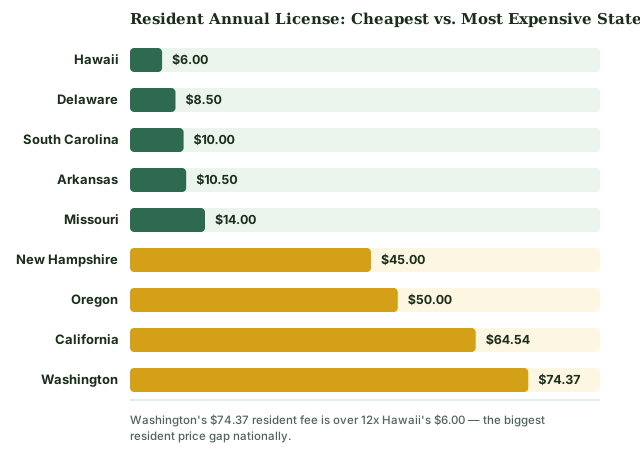
Resident annual licenses range from $8.50 (Delaware) to $74.37 (Washington) in 2026. The national average is $25–$30 for residents. Non-resident licenses run $20–$174 depending on the state. Short-term 1-day licenses typically cost $5–$21 for residents and $9–$25 for non-residents.
What's the difference between resident and non-resident licenses?
Resident licenses require proof you live in the state and are 40–70% cheaper. Non-resident licenses apply when you fish outside your home state. Some states also offer border-water reciprocal agreements where one license covers both sides of a shared river.
At what age do you need a fishing license?
Most states require a license starting at age 16. Wyoming starts at 14; a few states start at 15. Children under the threshold always fish free. Seniors 65+ qualify for free or discounted licenses in more than 35 states — select a state above to check if a senior discount applies.
Can I buy a fishing license online?
Yes — all 50 states allow online purchases through their state wildlife agency. Most licenses are valid immediately and can be printed or saved to your phone. Walmart, Bass Pro Shops, and Cabela's also sell licenses in person at the standard state price.
Do I need extra stamps or endorsements beyond the base license?
Often yes. Trout stamps, salmon endorsements, and saltwater licenses are frequently required on top of a base fishing license. California, Texas, Oregon, and Michigan all charge separately for trout or salmon. Check the note shown after selecting your state above for specifics.
All 50 States — License Fees
| State | Resident Annual | Non-Res Annual | 1-Day | Senior Disc. |
|---|
All 50 States — FAQs
Which state has the cheapest fishing license?
Hawaii has the lowest raw price at $5.00/year, though its license covers freshwater only. Delaware is the cheapest full-scope license at $8.50/year for residents. South Carolina and Mississippi tie at $10, and Arkansas ($10.50) rounds out the bottom five. See the full table above — click the Resident Annual column header to sort by price.
Which state has the most expensive fishing license?
Washington has the priciest resident license at $74.37, with California close behind at $64.54. For non-residents, California tops the list at $174.14, just ahead of Washington's $170.00 combination license. Oregon ($44 resident, $116 non-resident) and Nevada ($40/$80) are also among the priciest.
Which states offer free fishing licenses for seniors?
Over 35 states offer free or discounted licenses for residents 65+. States with free senior licenses include Alabama, Florida, Georgia, New York (70+), Maine (70+), and Louisiana. The "Senior Disc." column in the table above shows which states offer this benefit.
Do fishing license prices change every year?
Most states review fees every 3–5 years and increase them incrementally. California adjusts fees annually based on a cost-of-living formula. Prices on this site reflect current 2026 rates. Bookmark this page and check back — we update when state agencies publish new fee schedules.
Are there states with no freshwater fishing license requirement?
No — all 50 states require a license for freshwater fishing (for adults above the minimum age threshold). Some states waive the requirement if you're fishing on private property you own. Free fishing days (typically 1–2 per year) are offered by most states.
Lifetime License Break-Even Calculator
Is a lifetime fishing license worth it? Enter your state's fees and see exactly how many years until the lifetime license pays for itself.
Lifetime License — FAQs
Is a lifetime fishing license worth buying?
For regular anglers, yes. At the national average of $27/year, a $300 lifetime license pays off in about 11 years with a 3% annual fee increase factored in. The break-even calculator above gives you exact numbers for your state. The younger you buy, the better the math.
At what age should you buy a lifetime fishing license?
The earlier the better. Buying at 25 vs. 45 means 20 extra years of free fishing after break-even. Most financial planning advice recommends buying before age 40 if you fish consistently. Some states tier their lifetime license price by age — buying younger can mean a lower price too.
Do all states offer lifetime fishing licenses?
Most states offer them, but not all. Prices range from ~$50 (Missouri residents 65+) to over $1,000 in some states. Some states use tiered pricing by age group — under 16, 16–64, 65+. Check your state's official wildlife agency website for lifetime license availability and current pricing.
What happens to a lifetime license if I move to another state?
It stays valid only in the issuing state. If you move, you'd need to purchase a non-resident license (or new resident license after establishing residency) in your new state. The lifetime license from your old state doesn't transfer. Factor this in if you think you may relocate.
Do lifetime licenses cover all fish species?
The base lifetime license covers standard freshwater fishing. Trout stamps, salmon endorsements, and saltwater licenses are usually required separately — even with a lifetime base license. States like Michigan, Oregon, and California all charge add-on fees regardless of whether your base license is annual or lifetime.
Multi-State Trip Planner
Planning to fish across multiple states? Add each state below to see your total license cost for the trip.
Trip Planning — FAQs
Do I need a fishing license in every state I fish?
Yes — each state requires its own valid license. Your home state license does not apply in other states. Plan to purchase a separate license for every state you'll fish on a multi-state trip. Use the planner above to calculate your total before you go.
Are there reciprocal fishing license agreements between states?
A few border waterways have reciprocal agreements. Parts of the Delaware River (NJ/PA border), the St. Croix River (MN/WI), and certain waters on the NC/TN border allow one state's license on both sides. These are exceptions — always verify before assuming your license carries over.
What's the cheapest way to fish multiple states on one trip?
Buy 1-day licenses only for states where you'll fish briefly (one stop). For states where you'll spend most of your trip, an annual license can be cheaper if you plan to return within the year. The trip planner above lets you mix license types per state to find the lowest total cost.
Can I get a non-resident 1-day license in any state?
Most states offer short-term non-resident licenses — typically 1-day, 3-day, or 7-day options ranging from $7–$25/day. Some states (like Louisiana, Georgia, Mississippi) only offer annual non-resident licenses with no short-term option. Check the "1-Day" column in the All 50 States tab for availability.
Do I need separate licenses for saltwater and freshwater in each state?
Many coastal states require separate licenses. Florida, Texas, California, and most Atlantic states charge separately for saltwater fishing on top of a freshwater base license. For multi-state coastal trips, budget $15–$50 extra per state for saltwater endorsements. Always check state requirements before fishing the coast.